What Causes Slab Leaks in Coachella Valley Homes?
Slab leaks are not random bad luck. In the Coachella Valley, they follow a pattern — the same three forces cause the vast majority of them, and they…
Slab leaks are not random bad luck. In the Coachella Valley, they follow a pattern — the same three forces cause the vast majority of them, and they hit certain homes far harder than others. Understand what causes slab leaks here, and you can read your own home's risk like a map. Here is the full picture.
Cause #1: Hard Water vs. Copper
Start with the water. Coachella Valley municipal water is famously hard — loaded with dissolved calcium and magnesium. That hardness does not just spot your faucets. It drives pitting corrosion inside copper pipes: the protective oxide layer gets stripped, corrosion concentrates at single points, and eventually a pinhole bores straight through.
This is a slow-motion process measured in decades, which is why it maps so neatly onto the valley's housing stock. A copper line installed in 1985 has had 40 years of hard water flowing through it. The pitting happening today started as microscopic damage in the 1990s. When a homeowner in a 1970s Palm Desert home gets their second slab leak, it is not bad luck — it is chemistry finishing what it started before they bought the house.
Cause #2: Shifting Desert Soil
Now the ground. Desert soil around the valley is expansive — it swells when wet and shrinks when dry, and our extreme temperature swings drive constant movement. Buried water lines ride that movement. Every cycle stresses joints, bends, and fittings a little more.
Concrete slabs move too, just less visibly. Differential settling — one section of the foundation shifting slightly more than another — puts shear stress on the pipes cast within or buried beneath. Over decades, that stress fatigues copper at its weakest points: elbows, tees, and anywhere the original installer left the pipe bearing against rebar or aggregate. The leak that appears 'suddenly' is usually the final failure of a joint that has been stressed for 30 years.
Cause #3: Old Pipes, Old Installation Practices
The third force is the simplest: age. Copper is durable, but it is not immortal — especially copper installed during the valley's big building booms, when speed sometimes beat craftsmanship. Kinked pipe that was straightened on site, joints with excess flux left inside, lines resting directly on rebar: these installation sins from the 60s, 70s, and 80s are failing now, right on schedule.
Galvanized steel, found in the oldest valley homes, fails differently — it rusts from the inside until flow chokes down and the pipe finally perforates. Either way, the risk curve climbs steeply after 30 years and gets serious after 40. If your home still has its original lines and was built before 1990, you are in the window where slab leaks stop being rare.
The Accelerants: Pressure and Water Chemistry
Two accelerants worth knowing. High water pressure — common in parts of the valley where municipal pressure runs 80+ PSI — hammers every joint and thins every weak spot faster. A pressure regulator set to 50–60 PSI is cheap protection most homes already have; if yours is original to the house, it may have failed silently years ago.
And water chemistry varies by water district. Some valley districts have more aggressive water than others — higher chlorides, lower pH — which corrodes copper faster. Two identical 1980 homes on different water systems can have very different pipe conditions. This is why blanket advice has limits, and why an actual assessment of your lines beats guessing from the build year.
Reading Your Own Home's Risk
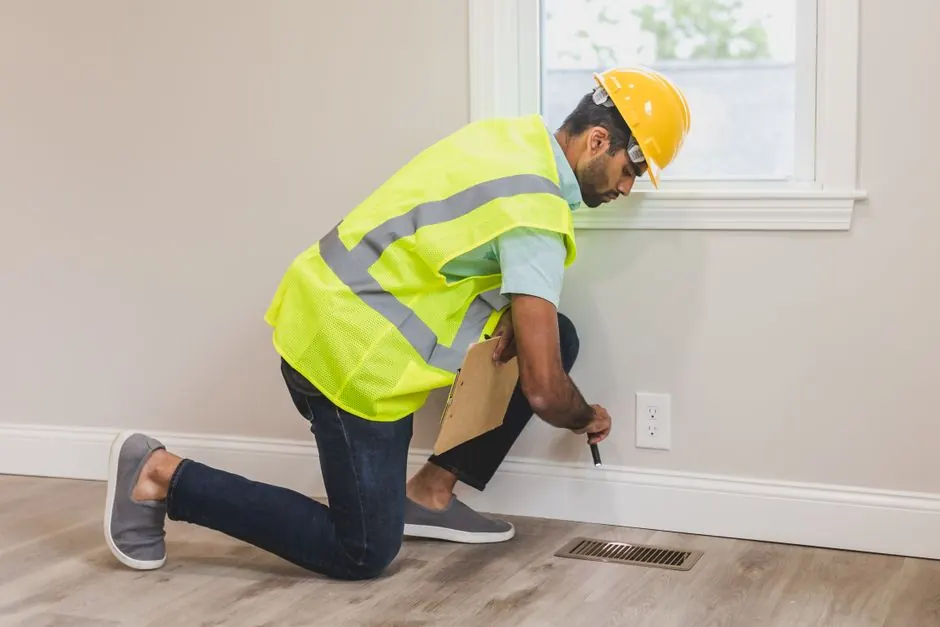
So what do you do with this knowledge? First, know your home: build year, pipe material, water district, regulator condition. That is your risk profile in four facts. Second, watch for the early warnings — warm floor spots, running-water sounds, climbing water bills, musty smells — and act on them fast instead of explaining them away.
Third, consider a proactive assessment if your home is over 30 with original plumbing. A pressure test and line inspection reveals thinning and existing pinholes before they become slab failures — and the resulting report tells you whether you are looking at years of remaining life or a repipe decision. The causes of slab leaks are well understood. The only question is whether you find out about yours from an inspection or from water coming through the floor.
Electrolysis: The Hidden Accelerator
There is a fourth cause most articles skip: electrolysis, also called galvanic corrosion. It happens when copper pipe contacts a dissimilar metal — a steel hanger, rebar in the slab, or even a different copper alloy at a fitting — in the presence of moisture. A tiny electrical current flows between the metals, and the copper loses.
In valley slabs, the classic version is copper resting directly against steel rebar, sometimes for decades. The contact point becomes an anode and corrodes preferentially — a pinhole forms exactly where the pipe touches the steel. Good installers sleeve or isolate copper from rebar; rushed ones from the building-boom years did not. When a slab leak appears at a spot where the pipe crossed rebar, electrolysis is the likely culprit, and it is one more reason the failed section's neighbors deserve inspection too.
Newer Homes: Lower Risk, Not Zero
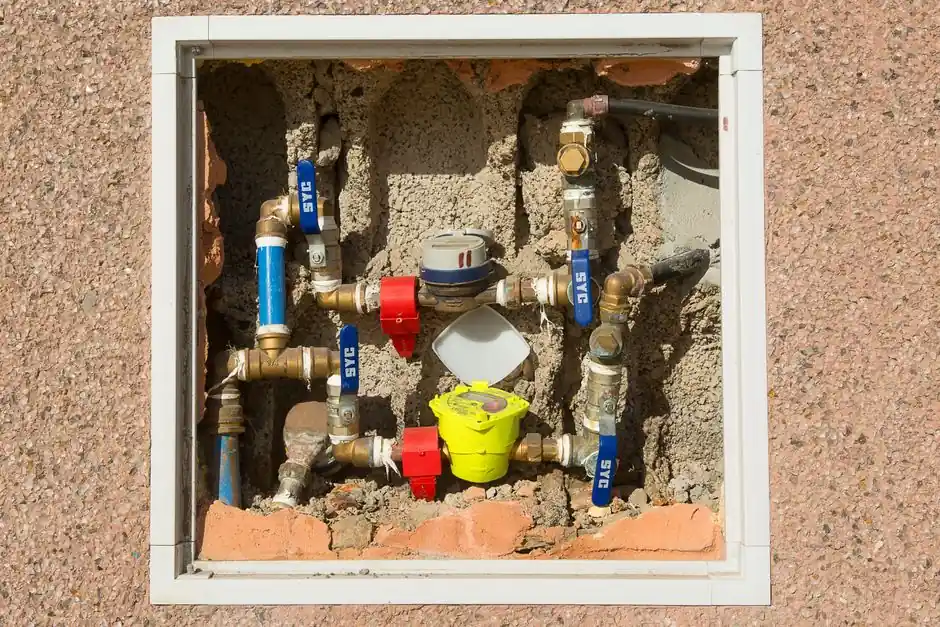
If your home was built in the 2000s or later with PEX plumbing, your slab leak risk is dramatically lower — PEX does not corrode, and modern installation standards are better. But 'lower' is not 'zero.' Badly installed PEX can still fail at fittings, and the water service line from the meter (often still copper or PVC) lives by the old rules.
And newer does not mean perfect: rushed tract-home plumbing has its own failure modes, from nicked PEX to poorly seated fittings that let go years later. The causes shift from chemistry and age to workmanship — which is why even newer-home buyers benefit from a pressure test during inspection. Whatever the era, the principle holds: know what is in your slab before the slab tells you.

Related reading
Need help now? Call (760) 254-9953 — 24/7 call line across the Coachella Valley.
Frequently Asked Questions
What is the most common cause of slab leaks in the Coachella Valley?
The big three in the valley: corrosive hard water eating copper from the inside, expansive desert soil stressing buried pipes and joints, and simple age — much of the valley's housing stock has 30-to-60-year-old plumbing. Poor original installation and high water pressure are secondary contributors.
Which homes are most at risk for slab leaks?
Homes built from the 1960s through the 1990s with original copper lines are the highest risk group right now — that copper is 30 to 60 years old. Older homes with galvanized steel are also vulnerable. Newer PEX-plumbed homes are at much lower risk.
Can slab leaks be prevented?
Not entirely, but you can stack the odds. A water softener reduces the corrosive attack on copper. A pressure regulator keeps stress off joints. And periodic leak detection catches pinholes before they become slab failures. None of these stop aging, but they buy years.
Is there a test that shows my pipes' condition before they fail?
Yes — arguably the most important one. A pressure test and inspection of an older home's lines reveals thinning, existing pinholes, and pressure problems before they turn into emergencies. For homes over 30 years old with original plumbing, it is cheap peace of mind.
Get Help in the Coachella Valley
Wondering whether your home is at risk? Age, pipe material, and water chemistry tell most of the story — and a professional assessment tells the rest. Our leak detection gives you a clear picture of your plumbing's condition before a failure forces the issue. Call Palm Springs Leak Pros at (760) 254-9953 — available 24/7 across the Coachella Valley.