Soggy Yard Spot in Palm Springs? Water Line Leak Signs
There is a patch in your yard that never quite dries out. The sprinklers have not run in days, but the ground is still soggy — maybe even a little…
There is a patch in your yard that never quite dries out. The sprinklers have not run in days, but the ground is still soggy — maybe even a little sunken. In Palm Springs, where the ground should be bone dry between waterings, a perpetually wet spot is your main water line waving a red flag. Here is what it means and what to do about it.
What a Soggy Spot Is Telling You
Your main water line runs from the street meter to your house, buried a foot or two under your yard. When it cracks — from soil shifting, root intrusion, or just decades of age — water seeps out continuously. In our desert, that creates an unmistakable signature: a patch of ground that stays damp when everything around it is dry.
Look for the companions too. Grass or plants growing noticeably lusher in one area (free fertilizer and water). A slight depression or sinkhole forming as soil washes away underground. The sound of running water near the meter when the house is silent. And the big one: a water bill that jumps $50, $100, or more with no change in your usage. A main line leak can waste thousands of gallons a month — you are paying for water that is feeding your subsoil.
The 15-Minute Test You Can Do Yourself
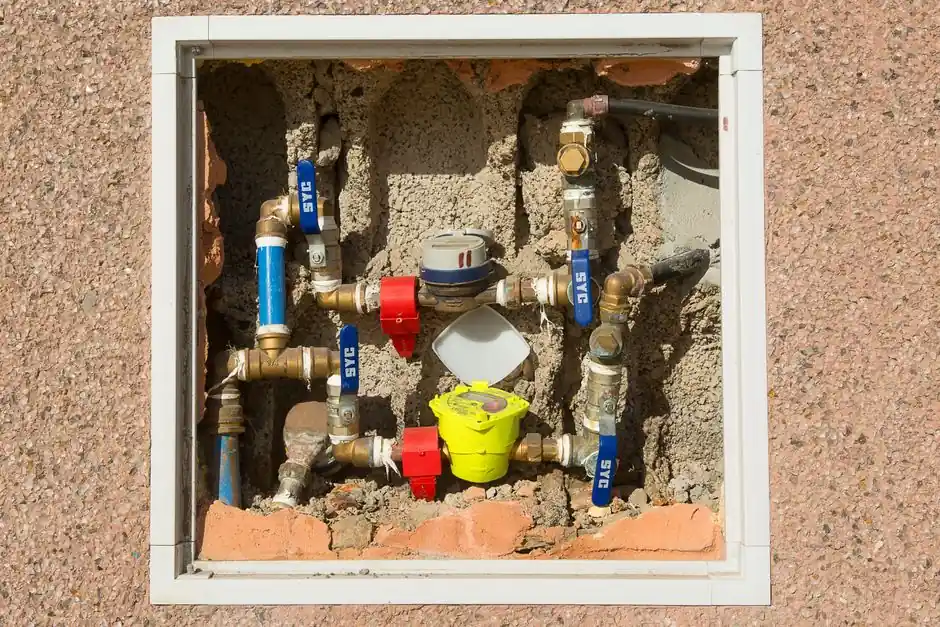
Before you call anyone, run the meter test. Turn off every tap, appliance, and irrigation valve in the house — everything. Go to your water meter (usually near the street in a concrete box) and watch the dial or the small leak-indicator triangle for 15 minutes. If it moves at all with zero water running inside, you have a leak between the meter and the house.
Next, isolate the irrigation. Turn off the sprinkler controller entirely for 48 hours. If the soggy spot dries up, your leak is in the irrigation system — annoying but cheap. If it stays wet, the main line is your prime suspect. This two-step check takes ten minutes of your time and tells a professional exactly where to start looking.
Why Palm Springs Yards Hide Leaks So Well
Palm Springs yards hide leaks well. Drip irrigation keeps soil damp by design, so a leak near a drip zone can blend in for months. Decomposed granite and desert landscaping drain fast on the surface while water pools underneath — you might not see sogginess at all, just a settling walkway or a leaning fence post.
Our soil makes things worse. Sandy desert soil drains quickly but shifts easily, stressing buried pipes at joints. Summer heat expands the ground; winter nights contract it. Year after year, that movement works on every coupling. Older neighborhoods — the Movie Colony, Twin Palms, parts of south Palm Springs with original 1950s–60s service lines — are prime territory for main line failures. If your home still has its original galvanized or early copper service line, the question is not if but when.
How Professionals Pinpoint It Without Trenching
Once the meter test points to the main line, professional detection takes over. Acoustic listening equipment picks up the hiss of pressurized water escaping underground — a technician sweeps the yard and the sound gets loudest right over the break. Pressure testing isolates sections of the line to confirm which segment is failing.
The payoff is precision. Without detection, a plumber trenches from the meter toward the house hoping to stumble onto the break — tearing up landscaping, walkways, and driveways along the way. With detection, the dig happens in one marked spot, usually a few square feet. The detection visit costs a fraction of a full-yard trench restoration. Get located first, dig second — always.
Repair or Replace: Making the Call
For a typical Palm Springs residential main line, repair runs $1,500–$4,000 depending on depth, pipe material, and what sits above the break (lawn is cheap to restore; a concrete driveway is not). Full replacement of an aging service line runs $3,000–$7,000+ but ends the cycle of recurring breaks.
Here is the decision framework: one break in a 15-year-old copper line? Repair it. Multiple breaks, or a galvanized line from the 1960s? Replace the whole run — every repair is just buying time on a system that is failing everywhere at once. And either way, fix it soon. A main line leak does not just waste water; it erodes the soil under walkways, driveways, and eventually your foundation. The soggy spot is the cheap warning. What comes after is not.
What a Repair Actually Involves
Once the break is pinpointed, the repair itself is usually straightforward. The crew exposes the damaged section — a small, targeted excavation, not a trench across the yard — cuts out the failed pipe, and splices in new material with proper couplings. For copper or galvanized service lines, many plumbers recommend replacing the damaged section with PEX or new copper rather than patching, since the surrounding pipe is the same age as the part that failed.
The restoration matters as much as the plumbing. A good crew backfills and compacts properly so the patch does not settle into a dip six months later, and restores landscaping as close to original as possible. Ask about this upfront — the cheapest plumbing quote is not the cheapest project if you have to hire a landscaper afterward to fix a sunken, patchy repair.
Preventing the Next One
A main line does not have to be a recurring surprise. If your home still has its original galvanized or early copper service line from the 50s, 60s, or 70s, consider proactive replacement before it fails — especially if you have already had one break. Modern PEX or copper service lines, properly bedded in sand (not sharp native soil), last decades with far fewer issues.
Two cheap protections: a pressure regulator if your municipal pressure runs high, and keeping deep-rooted trees away from the line's path. And know where your line runs — call 811 before any digging project, every time. Half the 'mysterious' main line breaks in the valley trace back to a fence post, a new tree, or a landscaping project that nicked the pipe years ago.
Related reading
- contact us — place in the CTA paragraph on the words inviting the reader to get in touch
- water line leak repair costs — place in the section about repair costs
- water line leak repair — place in section 1 where the main line is discussed
Need help now? Call (760) 254-9953 — 24/7 dispatch across the Coachella Valley.
Frequently Asked Questions
How can I tell if a soggy yard spot is a sprinkler leak or a water line leak?
A sprinkler leak is usually near a head or valve and the wet area comes and goes with the watering schedule. A water line leak runs 24/7 — the spot stays soggy even days after the sprinklers last ran. If it never dries, suspect the main line, not the sprinklers.
Can I test for a water line leak myself with the water meter?
Yes — turn off every tap in the house, then watch your water meter for 15 minutes. If the dial moves with no water running, water is escaping somewhere between the meter and the house. That is a strong indicator of a main line leak.
How much does water line leak repair cost in Palm Springs?
It depends on depth, soil, and surface — but in our sandy desert soil, expect $1,500–$4,000 for a typical residential repair in the valley. The detection visit that pinpoints the break is a fraction of that and prevents paying for exploratory digging across the whole yard.
My yard is desert landscaping — how would I even notice a leak?
Desert landscaping with drip irrigation can mask a leak for months — the ground is supposed to be wet near emitters. Watch for spots that stay soggy between watering cycles, unusually lush plant growth in one area, or a water bill climbing while your irrigation schedule has not changed.
Get Help in the Coachella Valley
A soggy patch that never dries is your yard telling you something is wrong underground. Our water line leak detection finds the break without tearing up your whole landscape — acoustic equipment and pressure testing pinpoint it first. Call Palm Springs Leak Pros at (760) 254-9953 — available 24/7 across Palm Springs, Cathedral City, Desert Hot Springs, Thousand Palms, and the Coachella Valley.